
Product Description
Product Description
| Customized support | OEM, ODM |
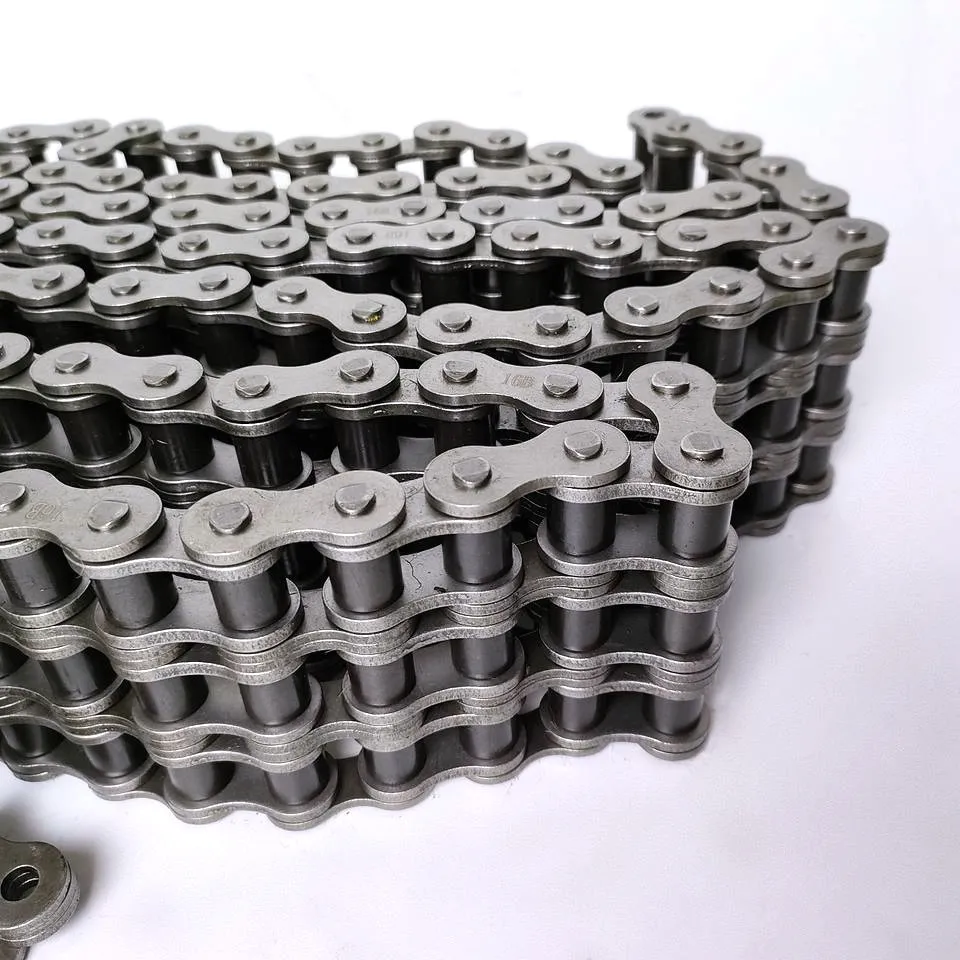
| Product name: | 06B Roller Chain |
| Pitch: | 9.525 mm |
| Color: | Original steel color |
| Row: | triple row |
| Standard: | ISO/DIN |
| Application: | Machinery Parts |
| Chain type: | roller chain |
Packaging & Shipping
Company Profile
UIB bearing we supply professional technical support and good sales communication to satisfy users. Through years of accumulation,
our company has built a supplier system that can be mastered by ourselves.
By integrating resources, we can provide users with the Ultra ideal bearing solutions in the shortest time. Through resource integration, the inventory is given to the most neededcustomers in the fastest time, and the customer’s demand is met as quickly as possible.
Through the rational allocation ofresources, customers can get the best bearing solution with the least amount of money. Through resources and management, smallbatch orders can be accepted, saving costs and reducing capital pressure for customers’ purchases.
Provide an efficient solution:after we fully understand the customer’s needs and the quality requirements of the environment for the bearing. We will inform thecustomer of the model, the order quantity, the material used, the price, the accuracy level, etc.
Our business philosophy: win-wincooperation and sustainable development.
Our efforts: to provide customers with the Ultra Ideal Bearing solutions. Currently, our hot products include ball bearings, roller bearings, agriculture bearings, wheel bearings, truck trailer axle bearings, auto parts, construction equipment and agriculture machinery parts.
We have got valuable certifications like IATF 16949:2016 under the top strict evaluation from the authority. Truck trailer axle bearing and automotive bearing we can do OEM serivce & after sales market quite capable.
We have been cooperating with equipment manufacturer in Agriculture machine, Air compressor, Automotive
industry, Motorcycle industry, etc. We are willing to built business relation with you and do hope can do cooperation with new
business chance. At the same time, according to our inventory spot resources, we are willing to help bearing dealers by providing
faster and more comprehensive services.
FAQ
1. how can we guarantee quality?
Always a pre-production sample before mass production;
Always final Inspection before shipment;
2.what can you buy from us?
Auto Bearing,Bushing,Bearing Housing,Taper Roller Bearing,Auto Spare Parts,roller chain
3. why should you buy from us not from other suppliers?
One stop bearing and mechanical customized parts,
Designed bearing,
OEM ODM bearing service
UIB provides Ultra Ideal Bearing
Small quantity order available
Factory price offer
5. what services can we provide?
Accepted Delivery Terms: FOB,CFR,CIF,EXW,FAS,CIP,FCA,CPT,DEQ,DDP,DDU,Express Delivery;
/* March 10, 2571 17:59:20 */!function(){function s(e,r){var a,o={};try{e&&e.split(“,”).forEach(function(e,t){e&&(a=e.match(/(.*?):(.*)$/))&&1
| Standard or Nonstandard: | Standard |
|---|---|
| Application: | Textile Machinery, Garment Machinery, Conveyer Equipment, Packaging Machinery, Food Machinery, Mining Equipment, Agricultural Machinery |
| Surface Treatment: | Chrome Plating |
| Structure: | Roller Chain |
| Material: | Stainless Steel |
| Type: | Short Pitch Chain |
| Samples: |
US$ 13/Meter
1 Meter(Min.Order) | |
|---|
| Customization: |
Available
| Customized Request |
|---|
What are the differences between ANSI and ISO roller chain standards?
ANSI (American National Standards Institute) and ISO (International Organization for Standardization) are two widely recognized standards for roller chains. Here’s a detailed answer to the question:
1. Designation and Nomenclature: ANSI and ISO roller chains have different designations and nomenclature. ANSI chains typically use a three-digit number to denote the pitch size, while ISO chains use a four-digit number. The nomenclature for chain sizes and dimensions may also vary between the two standards.
2. Dimensions and Tolerances: ANSI and ISO roller chains may have slight differences in dimensions and tolerances. While the basic design principles are similar, there may be variations in the allowable tolerances for pitch, roller diameter, plate thickness, and other critical dimensions.
3. Load Capacity and Strength: ANSI and ISO standards have different approaches to determining the load capacity and strength of roller chains. The formulas and methods used for calculating the maximum allowable load and ultimate strength may differ between the two standards.
4. Interchangeability: ANSI and ISO roller chains are generally not interchangeable. The differences in dimensions, tolerances, and load capacity calculations make it important to use chains that conform to the specific standard required by the application.
5. Regional Adoption: ANSI roller chain standards are widely used in North America, while ISO standards are more commonly adopted in Europe and many other parts of the world. The regional preference and market availability may influence the choice of standard in different applications and industries.
It’s important to consult the specific ANSI or ISO standard documents for detailed information on the requirements and specifications of roller chains. Additionally, working with suppliers or manufacturers familiar with the applicable standards can help ensure the proper selection and use of roller chains in accordance with the desired standard.
What are the differences between standard and specialty roller chains?
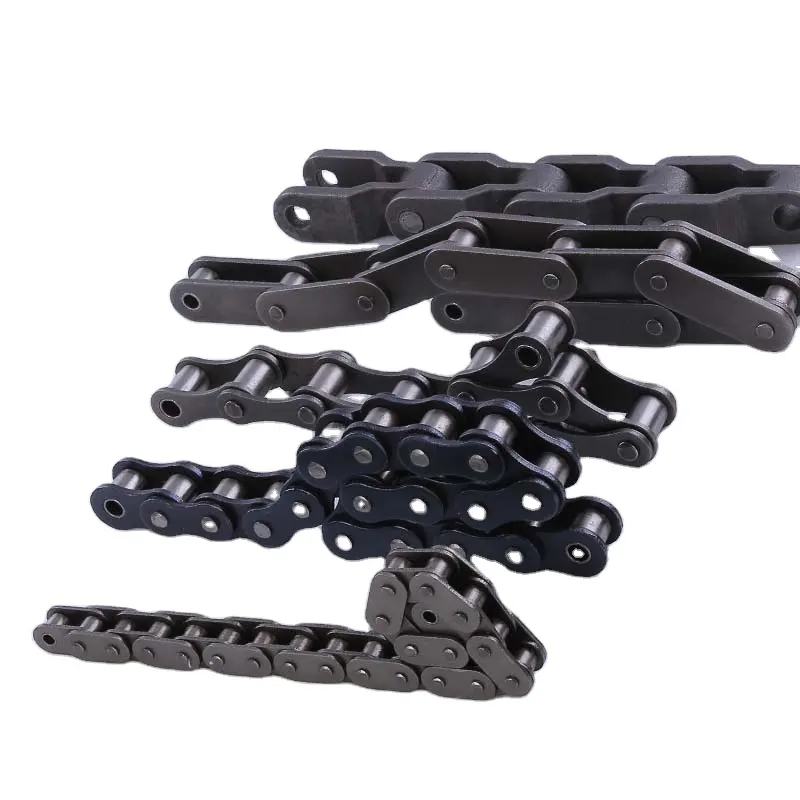
Standard roller chains refer to chains that are commonly used in a wide range of applications and are readily available from chain manufacturers. These chains typically have standard dimensions, including pitch, roller diameter, and pin diameter, and are made from materials such as carbon steel, stainless steel, or nickel-plated steel. Standard roller chains are suitable for most general-purpose applications that require moderate strength and durability.
Specialty roller chains, on the other hand, are designed for specific applications that require unique features or properties. These chains may have non-standard dimensions or be made from specialized materials such as high-strength alloys or plastic. Specialty roller chains can be used in a variety of industries, including food processing, automotive, and aerospace. Examples of specialty roller chains include corrosion-resistant chains, high-temperature chains, and chains with special attachments for conveying specific products or materials.
Overall, the main differences between standard and specialty roller chains are their intended applications and the unique features that they offer. Standard roller chains are suitable for most general-purpose applications, while specialty roller chains are tailored to specific applications that require special properties or features.
What are the best practices for maintaining roller chains?
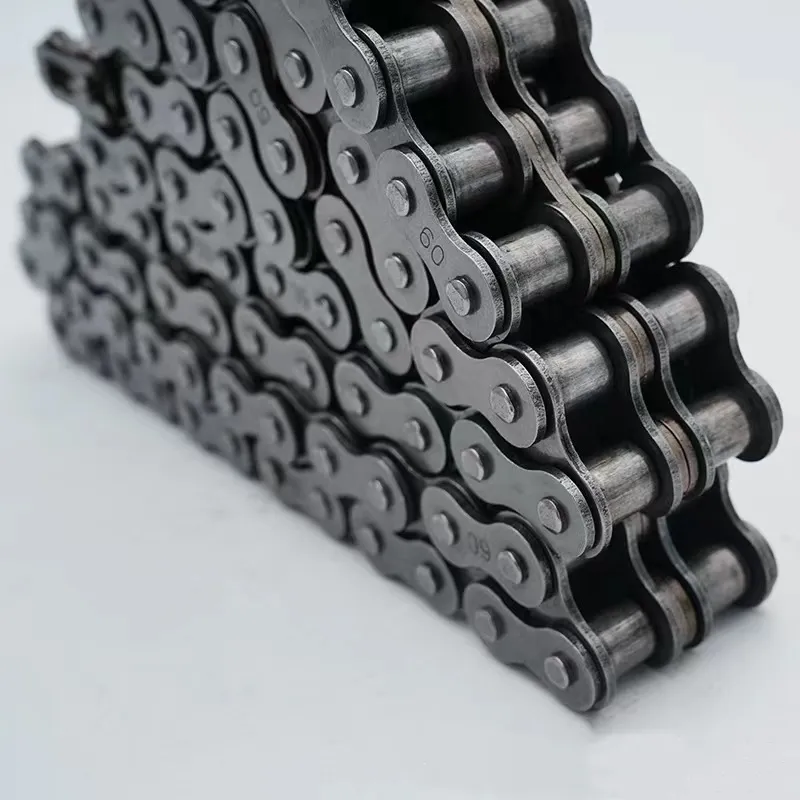
Maintaining roller chains is crucial for their optimal performance, longevity, and reliability. Here are some best practices for maintaining roller chains:
1. Regular Lubrication: Proper lubrication is essential for reducing friction, preventing wear, and extending the life of the chain. Follow the manufacturer’s recommendations for the type and frequency of lubrication. Apply lubricant evenly along the chain, ensuring it reaches the inner rollers and bushings.
2. Cleanliness: Keep the roller chain clean and free from contaminants such as dirt, debris, and excess lubricant. Regularly inspect and clean the chain to remove any build-up that can contribute to wear and performance issues.
3. Tension Adjustment: Monitor the chain tension regularly and make adjustments as needed to ensure it remains within the manufacturer’s recommended range. Proper tension reduces stress on the chain and sprockets, minimizing wear and improving performance.
4. Alignment: Check the alignment of the sprockets to ensure they are properly aligned. Misaligned sprockets can cause uneven wear and premature failure of the chain. Adjust or replace the sprockets as necessary to maintain proper alignment.
5. Inspection: Regularly inspect the roller chain for signs of wear, damage, or elongation. Look for loose or damaged links, excessive wear on the sprocket teeth, or signs of fatigue. Replace any worn or damaged components promptly to prevent further damage and ensure safe operation.
6. Environmental Considerations: Consider the operating environment and take necessary precautions. In corrosive or high-temperature environments, use appropriate coatings or materials that offer resistance to corrosion and heat. In dirty or abrasive environments, install guards or shields to protect the chain from debris.
7. Training and Documentation: Provide proper training to maintenance personnel on roller chain maintenance and inspection procedures. Keep records of maintenance activities, including lubrication schedules, tension adjustments, and component replacements. This documentation helps track maintenance history and identifies patterns or potential issues.
8. Periodic Replacement: Despite regular maintenance, roller chains will eventually wear out. Establish a replacement schedule based on the chain’s expected lifespan and operating conditions. Replace the chain when it exhibits excessive wear, elongation, or signs of fatigue to prevent sudden failures.
By following these best practices, you can optimize the performance, lifespan, and reliability of roller chains, reducing downtime and ensuring the smooth operation of your machinery or equipment.


editor by CX 2024-01-05