
Product Description
| Chain No | Pitch | Width Between Inner Plates |
Pin Dia |
Pin Length |
Inner Plate Depth |
Average Tensile Strength |
Weight |
| Mm | mm | mm | mm | mm | mm | Kn | kg/m |
| 04B-1 | 6.000 | 2.80 | 1.85 | 6.80 | 5.00 | 3.2 | 0.11 |
| 05B-1 | 8.000 | 3.00 | 2.31 | 8.20 | 7.10 | 5.9 | 0.20 |
| *06B-1 | 9.525 | 5.72 | 3.28 | 13.15 | 8.20 | 10.4 | 0.41 |
| 08B-1 | 12.700 | 7.75 | 4.45 | 16.70 | 11.80 | 19.40 | 0.69 |
| 10B-1 | 15.875 | 9.65 | 5.09 | 19.50 | 14.70 | 27.50 | 0.93 |
| 12B-1 | 19.050 | 11.68 | 5.72 | 22.50 | 16.00 | 32.20 | 1.15 |
| 16B-1 | 25.400 | 17.02 | 8.28 | 36.10 | 21.00 | 72.80 | 2.71 |
| 20B-1 | 31.750 | 19.56 | 10.19 | 41.30 | 26.40 | 106.7 | 3.70 |
| 24B-1 | 38.100 | 25.40 | 14.63 | 53.40 | 33.20 | 178.0 | 7.10 |
| 28B-1 | 44.450 | 30.99 | 15.90 | 65.10 | 36.70 | 222.0 | 8.50 |
| 32B-1 | 50.800 | 30.99 | 17.81 | 66.00 | 42.00 | 277.5 | 10.25 |
| 40B-1 | 63.50 | 38.10 | 22.89 | 82.20 | 52.96 | 394.0 | 16.35 |
| 48B-1 | 76.20 | 45.72 | 29.24 | 99.10 | 63.80 | 621.6 | 25.00 |
| 56B-1 | 88.90 | 53.34 | 34.32 | 114.60 | 77.80 | 940.0 | 35.78 |
Our company offers variety of products which can meet your multifarious demands. We adhere to the management principles of “quality first, customer first and credit-based” since the establishment of the company and always do our best to satisfy potential needs of our customers. Our company is sincerely willing to cooperate with enterprises from all over the world in order to realize a CHINAMFG situation since the trend of economic globalization has developed with anirresistible force.
/* March 10, 2571 17:59:20 */!function(){function s(e,r){var a,o={};try{e&&e.split(“,”).forEach(function(e,t){e&&(a=e.match(/(.*?):(.*)$/))&&1
| Standard or Nonstandard: | Standard |
|---|---|
| Application: | Food Machinery |
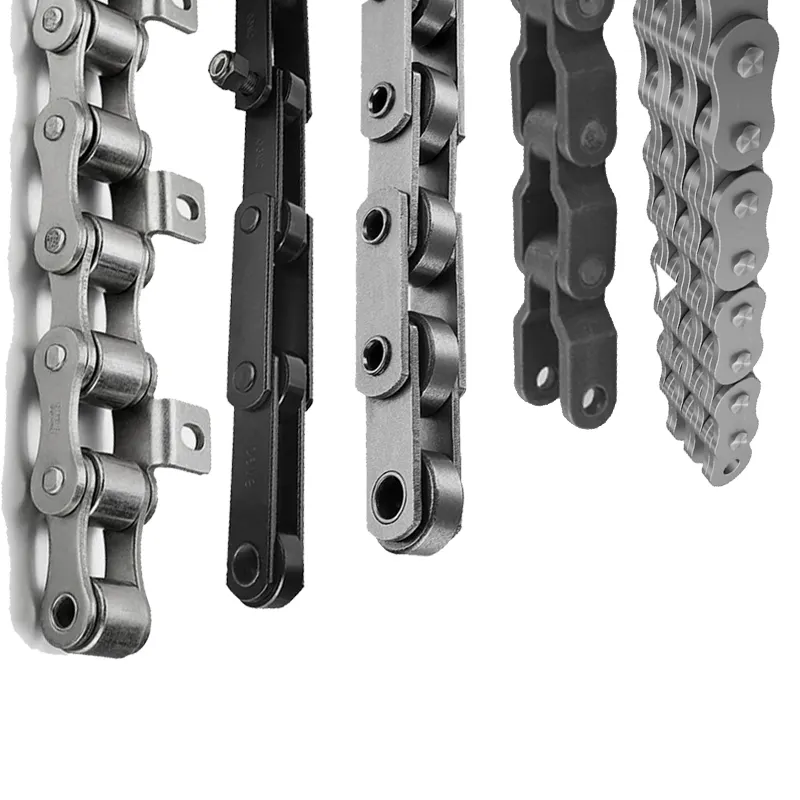
| Structure: | Roller Chain |
| Material: | Stainless Steel |
| Type: | Double Pitch Chain |
| Tensile Strength: | High |
| Customization: |
Available
| Customized Request |
|---|
Can roller chains be used for power transmission in bicycles?
Yes, roller chains are commonly used for power transmission in bicycles. Here’s a detailed answer to the question:
Roller chains are an integral component of bicycle drivetrains, transmitting power from the pedals to the rear wheel. They offer several advantages that make them well-suited for this application:
1. Efficient Power Transfer: Roller chains provide efficient power transfer from the rider’s pedaling force to the rear wheel of the bicycle. They have low frictional losses, allowing for a smooth and efficient transfer of energy, resulting in better propulsion and improved performance.
2. High Strength and Durability: Roller chains used in bicycles are designed to withstand the forces exerted during pedaling and the varying loads encountered during riding. They are constructed using high-quality materials and precise manufacturing techniques to ensure strength and durability.
3. Lightweight: Roller chains used in bicycles are lightweight, contributing to the overall weight reduction of the bike. This is important for cyclists as it allows for faster acceleration, easier maneuverability, and enhanced handling.
4. Versatility: Roller chains are available in various sizes and configurations, allowing them to be used in different types of bicycles. Whether it’s a road bike, mountain bike, or city bike, roller chains can be adapted to suit the specific requirements of the bike’s drivetrain.
5. Easy Maintenance: Roller chains in bicycles require regular maintenance to ensure optimal performance and longevity. Proper lubrication and periodic cleaning are essential to prevent wear and corrosion. Fortunately, bicycle chains are relatively easy to maintain and can be readily accessed for cleaning and lubrication.
6. Cost-Effective Solution: Roller chains offer a cost-effective solution for power transmission in bicycles. They are affordable and widely available, making them a practical choice for bike manufacturers and cyclists alike.
In summary, roller chains are commonly used for power transmission in bicycles due to their efficient power transfer, strength, durability, lightweight nature, versatility, ease of maintenance, and cost-effectiveness. They play a crucial role in ensuring a smooth and reliable ride for cyclists of all types and skill levels.
How do roller chains handle backstop or anti-reverse motion?
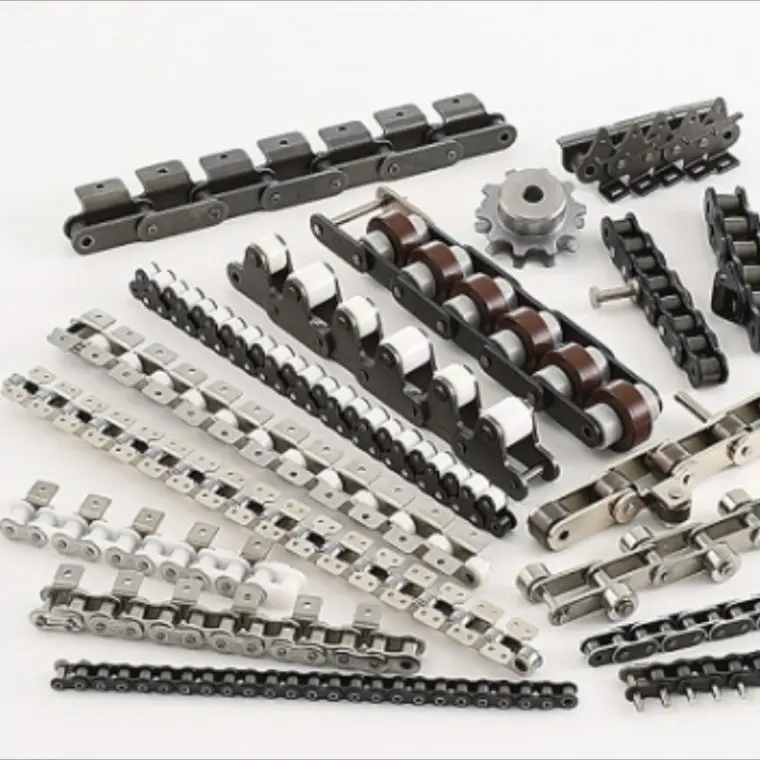
Roller chains are capable of handling backstop or anti-reverse motion through the use of specific chain attachments or additional components. Here’s a detailed answer to the question:
Backstop or anti-reverse motion is the ability of a system to prevent or control the reverse movement of a load. In applications where roller chains are required to handle backstop or anti-reverse motion, the following methods can be employed:
1. One-Way Clutch: A one-way clutch mechanism can be integrated into the system to allow the roller chain to transmit power in one direction while preventing reverse movement. This mechanism typically consists of a set of sprags or rollers that engage with the sprocket teeth in one direction and disengage in the reverse direction.
2. Ratchet and Pawl System: Another approach is the use of a ratchet and pawl system, where the roller chain is connected to a ratchet wheel with pawls that engage with the teeth of the wheel in one direction, allowing power transmission, and prevent reverse movement when the load tries to rotate in the opposite direction.
3. Overrunning Clutch: An overrunning clutch, also known as a freewheel, can be employed to allow the roller chain to transmit power in one direction and disengage in the reverse direction. This allows for smooth operation in applications where backstop or anti-reverse motion is required.
These mechanisms effectively enable the roller chain to handle backstop or anti-reverse motion by allowing power transmission in one direction and preventing reverse movement. The specific mechanism used depends on the application requirements and the desired level of control over the motion.
It’s important to consult the manufacturer’s guidelines and specifications when implementing backstop or anti-reverse motion in roller chain applications to ensure proper selection and installation of the appropriate mechanisms.
Can roller chains be used in high-temperature environments?
Yes, roller chains can be used in high-temperature environments, but it depends on the specific type of roller chain and the temperature range involved. Here is a detailed answer to the question:
1. Heat-resistant materials: Roller chains intended for high-temperature applications are typically made from heat-resistant materials such as stainless steel or alloy steels that can withstand elevated temperatures without significant deformation or loss of strength.
2. Lubrication: Proper lubrication is crucial for the operation of roller chains in high-temperature environments. Special high-temperature lubricants are available that can withstand the elevated temperatures without breaking down or evaporating, ensuring effective lubrication and reducing wear.
3. Heat treatment: Some roller chains undergo specific heat treatment processes to enhance their resistance to high temperatures. Heat treatment can improve the chain’s strength, hardness, and resistance to thermal expansion, enabling it to perform reliably in hot conditions.
4. Design considerations: Roller chain manufacturers take into account the effects of high temperatures on the chain’s performance and design features that mitigate these effects. This may include factors such as increased clearances, heat dissipation mechanisms, and special coatings or finishes to protect against corrosion or oxidation.
5. Temperature limitations: While roller chains can handle elevated temperatures, there are limits to their temperature resistance. The maximum temperature at which a roller chain can operate depends on factors such as the material, lubrication, load, and speed. It is crucial to consult the manufacturer’s specifications and guidelines to ensure the chain is suitable for the intended temperature range.
It is important to note that using roller chains in high-temperature environments may require additional precautions, such as proper ventilation, heat shielding, or periodic inspections to monitor chain performance and ensure safety and reliability. Consulting with experts or chain manufacturers is recommended to determine the most suitable roller chain for specific high-temperature applications.


editor by CX 2024-01-10