
Product Description
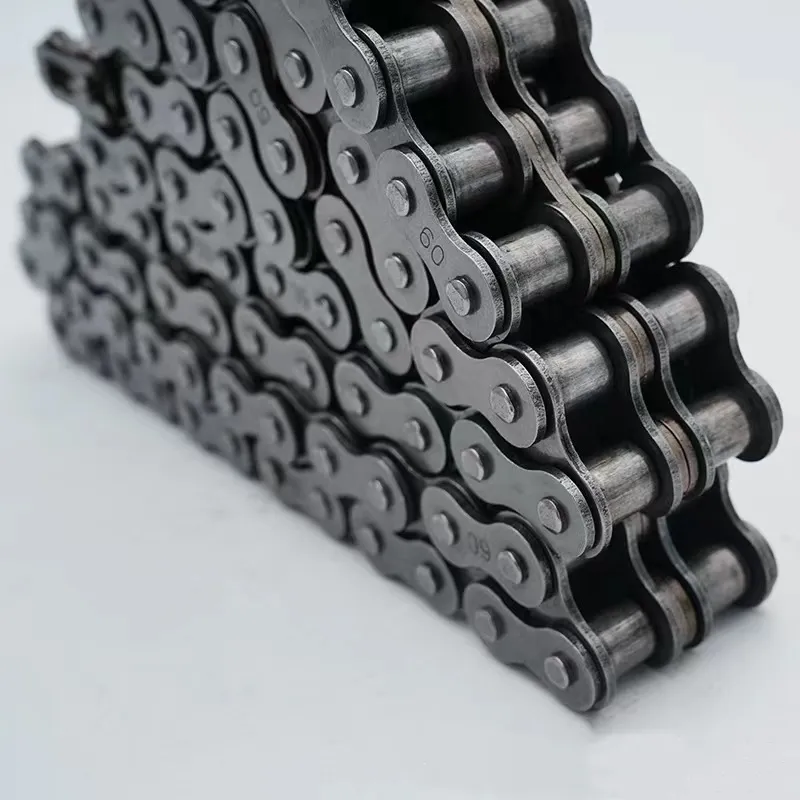
Conveyor Roller Chain with Pads
We have special technolodgy to arrange more hardness on SS chain plate as per the request of famous chain factory in Europen
We have many OEM chain factory customer from Europe and our stainless steel chain quality is similar to the A quality in the world
We are professional supplier of chain
1.Bicycle chains: 408,410,415
2.Motorcycle chains: 04C, 25H, 06C, T3, 270H,415H, 420, 420L, 425, 428, 428H, 520,
525, 530
3.ASA roller chains: 35, 40, 41, 50, 60, 60H, 80, 80H, 100, 120, 140, 160, 200, 240
(Catalog)
4.Chain (British standard): 05-B, 06-B, 08-B, 10-B, 12-B, 16-B, 20-B, 24-B, 28-B,
32-B, 40-B (Catalog)
5.Large pitch chain: 100, 100H, 120, 120H, 140, 140H, 160, 160H, 180, 200, 240
6.Extend-pitch precision roller chain: 208A, 208B, 210A, 210B, 212A, 212B, 216A,
216B, 220A,220B,224A,224B,228B,232B
7.Roller chains for beer buntline conveyor: CK-70S,CK-100S,CK-100SA,CK-100SC,CK-133XA,
CK-140X, CK-140XA,CK-150X,CK-150S,CK-154X,CK-155X,CK-155XA,CK-160X,CK-160XA,CK-160XB,CK-160XC,CK-165X,CK-165XA, CK-169, CK-180X,CK-180XA,CK-200S,CW-102,CW-127
8.Implement roller chain for conveyors: 81X, 81XH,81XHH,CA550,CA555,CA620
9.Multi strand sizes available; up to 5 strand, for select size standard attachment available
10.Chains from 04b~16b are with spring clip, other are riveted; cottered design
is available for size 80 to 240
11.Stainless steel chain and nickel plated chain is available; special designs also available
(i.e., oven conveyor) and we can produce as per material your requests, usually stainless steel chains material is SS304, if you need SS316 or SS316L etc. it is available too
Main Products
Company Information
HangZhou CHINAMFG Industry Co., Ltd. is a specialized supplier of a full range of chains, sprockets, gears, gear racks, v belt pulley, timing pulley, V-belts, couplings, machined parts and so on.
Due to our CHINAMFG in offering best service to our clients, understanding of your needs and overriding sense of responsibility toward filling ordering requirements, we have obtained the trust of buyers worldwide. Having accumulated precious experience in cooperating with foreign customers, our products are selling well in the American, European, South American and Asian markets.Our products are manufactured by modern computerized machinery and equipment. Meanwhile, our products are manufactured according to high quality standards, and complying with the international advanced standard criteria.
With many years’ experience in this line, we will be trusted by our advantages in competitive price, one-time delivery, prompt response, on-hand engineering support and good after-sales services.
Additionally, all our production procedures are in compliance with ISO9001 standards. We also can design and make non-standard products to meet customers’ special requirements. Quality and credit are the bases that make a corporation alive. We will provide best services and high quality products with all sincerity. If you need any information or samples, please contact us and you will have our soon reply.
Packaging & Shipping
Exhibition
/* January 22, 2571 19:08:37 */!function(){function s(e,r){var a,o={};try{e&&e.split(“,”).forEach(function(e,t){e&&(a=e.match(/(.*?):(.*)$/))&&1
| Material: | Alloy |
|---|---|
| Structure: | Roller Chain |
| Surface Treatment: | Black Treatment |
| Standard or Nonstandard: | Standard |
| Function: | Transmission Chain |
| Pitch: | 6.00mm-114.300mm |
| Customization: |
Available
| Customized Request |
|---|
How do roller chains handle variable speed applications?
Roller chains are well-suited for variable speed applications due to their inherent design characteristics. Here’s a detailed answer to the question:
1. Speed Range: Roller chains can accommodate a wide range of speeds, making them suitable for variable speed applications. The speed of the driven sprocket can be adjusted, and the chain will adapt to the changing speed requirements.
2. Smooth Power Transmission: Roller chains provide smooth and consistent power transmission even at varying speeds. The engagement between the chain and the sprockets remains constant, ensuring reliable power transfer without slippage or loss of efficiency.
3. Tension Adjustment: In variable speed applications, the tension of the roller chain may need to be adjusted to maintain optimal performance. Proper tension ensures proper engagement with the sprockets and prevents excessive wear or elongation of the chain.
4. Lubrication: Adequate lubrication is crucial for roller chains in variable speed applications. Lubrication helps reduce friction, wear, and heat generation, ensuring smooth operation and extending the chain’s lifespan. Depending on the speed range and operating conditions, the appropriate lubrication method and frequency should be determined.
5. Chain Selection: Selecting the right type and size of roller chain is important for variable speed applications. Different chain designs and materials may have specific speed limitations or performance characteristics. Consulting the manufacturer’s specifications and recommendations can help ensure the chain’s compatibility with the required speed range.
6. System Design Considerations: When designing variable speed applications with roller chains, factors such as sprocket sizes, drive ratios, and load requirements should be carefully considered. Proper sizing and alignment of the sprockets, as well as selecting the appropriate chain pitch, can contribute to the smooth operation and longevity of the system.
It’s important to note that proper maintenance, including regular inspection, lubrication, and tension adjustment, is essential for roller chains in variable speed applications. Monitoring the chain’s condition and addressing any signs of wear or damage promptly will help ensure safe and reliable operation.
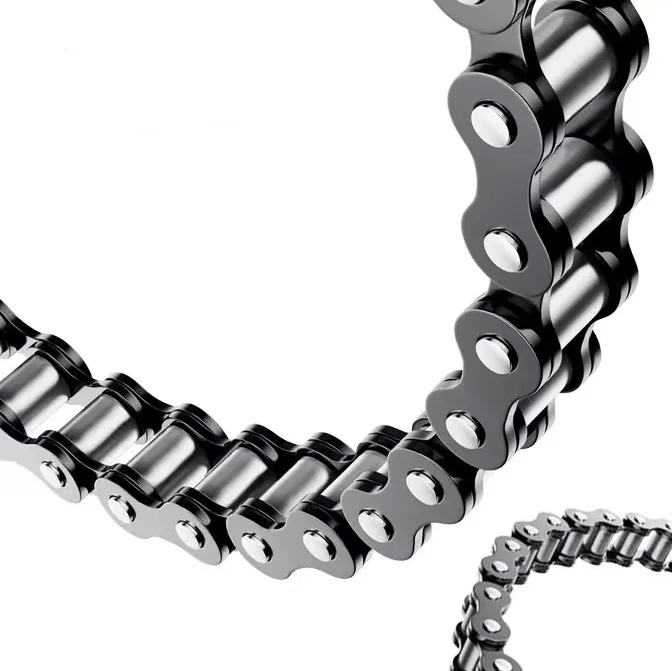
What are the advantages of using a roller chain over a timing belt?
Roller chains and timing belts are both commonly used for power transmission in various applications. Here’s a detailed answer to the question:
Advantages of using a roller chain:
1. Higher Load Capacity: Roller chains are capable of handling higher loads compared to timing belts. They are designed to transmit power in heavy-duty applications where high torque and shock loads are present.
2. Flexibility in Power Transmission: Roller chains are more versatile in terms of power transmission. They can transmit power over longer distances and are suitable for applications that require multiple shafts and complex power transmission routes.
3. Tolerance to Misalignment: Roller chains can tolerate more misalignment between the driving and driven sprockets compared to timing belts. They can accommodate slight angular misalignments and axial movements, making them suitable for applications where alignment precision is challenging.
4. Resistance to Harsh Environments: Roller chains are generally more resistant to contaminants, such as dirt, dust, and debris, compared to timing belts. They are commonly used in applications where exposure to harsh environments, such as high temperatures, chemicals, or abrasive particles, is expected.
5. Easy Maintenance and Replacement: Roller chains are relatively easy to maintain and replace. Regular lubrication, tension adjustment, and periodic inspection can help prolong their lifespan. In case of wear or damage, individual chain links can be replaced without the need for replacing the entire chain, making maintenance more cost-effective.
It’s important to note that the choice between a roller chain and a timing belt depends on various factors, including the specific application requirements, load conditions, speed, accuracy, and environmental considerations. Consulting with experts and considering the specific needs of the application can help determine the most suitable power transmission solution.
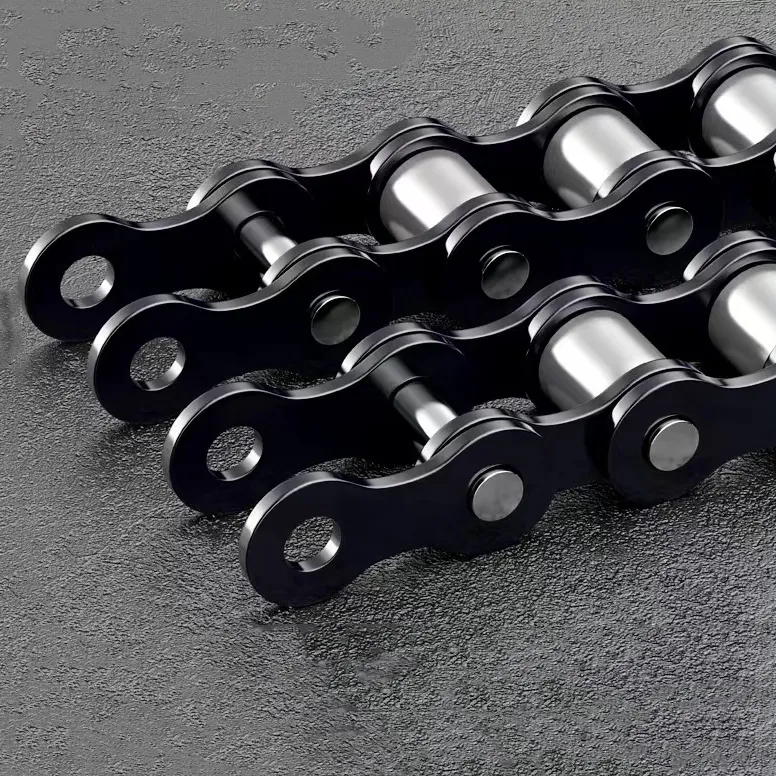
What are some common causes of roller chain failure?
Roller chain failure can occur due to various factors. Here’s a detailed answer to the question:
1. Insufficient Lubrication: One of the primary causes of roller chain failure is inadequate lubrication. Insufficient lubrication leads to increased friction, heat generation, and wear between the chain’s components, such as pins, bushings, and rollers. Over time, this can cause the chain to seize up, deform, or break.
2. Contamination: Contamination of the roller chain with dirt, dust, debris, or foreign particles can accelerate wear and increase the risk of failure. These contaminants can penetrate the chain’s joints, causing abrasive action and reducing the effectiveness of lubrication. Contamination can also cause corrosion, leading to weakened chain links.
3. Misalignment: Improper alignment of the sprockets and other drivetrain components can cause excessive side loading, uneven wear, and accelerated fatigue on the roller chain. Misalignment can result from improper installation, worn sprockets, or misaligned shafts, and it can lead to premature chain failure.
4. Overloading: Subjecting the roller chain to loads beyond its rated capacity can cause stress and fatigue, leading to chain failure. Overloading can occur due to improper application design, sudden shock loads, or continuous operation near or beyond the chain’s maximum load limit.
5. Wear and Fatigue: Over time, roller chains experience wear and fatigue due to normal usage. As the chain articulates around the sprockets, the pins, bushings, and rollers undergo cyclic stress, which can lead to wear, elongation, and eventually chain failure if not addressed through regular maintenance and replacement.
6. Corrosion: Exposure to corrosive environments, such as high humidity, chemicals, or saltwater, can cause corrosion on the roller chain. Corrosion weakens the chain’s structural integrity, leading to reduced load-carrying capacity and increased susceptibility to failure.
Proper maintenance, including regular lubrication, cleaning, inspection for wear and alignment, and avoiding overloading or exposure to harsh environments, is crucial to prevent roller chain failure. Timely replacement of worn or damaged chains and addressing any underlying issues that contribute to chain failure is essential for ensuring the reliable and safe operation of machinery or equipment.


editor by CX 2024-04-08